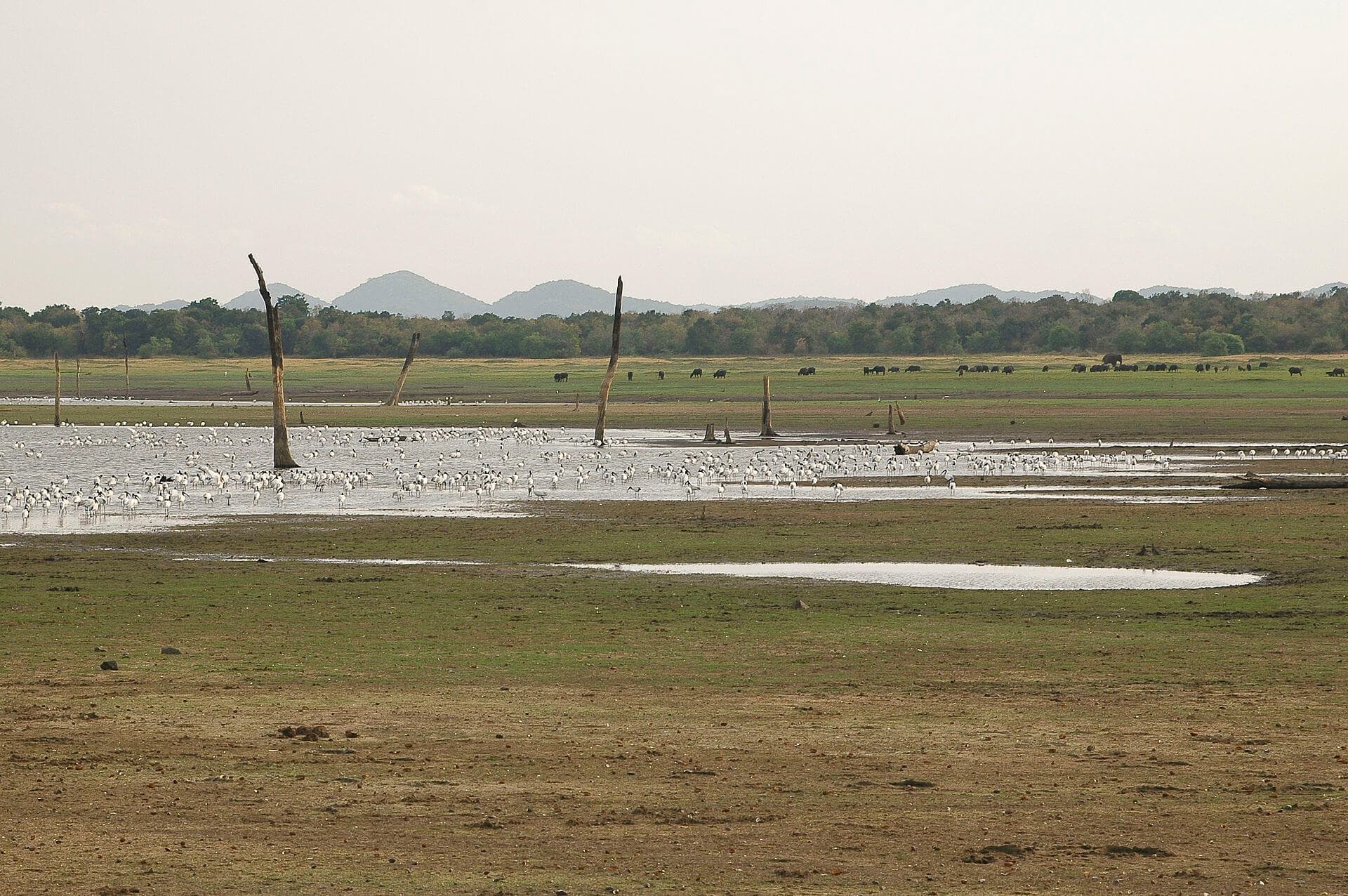
Wildlife at Kaudulla National Park
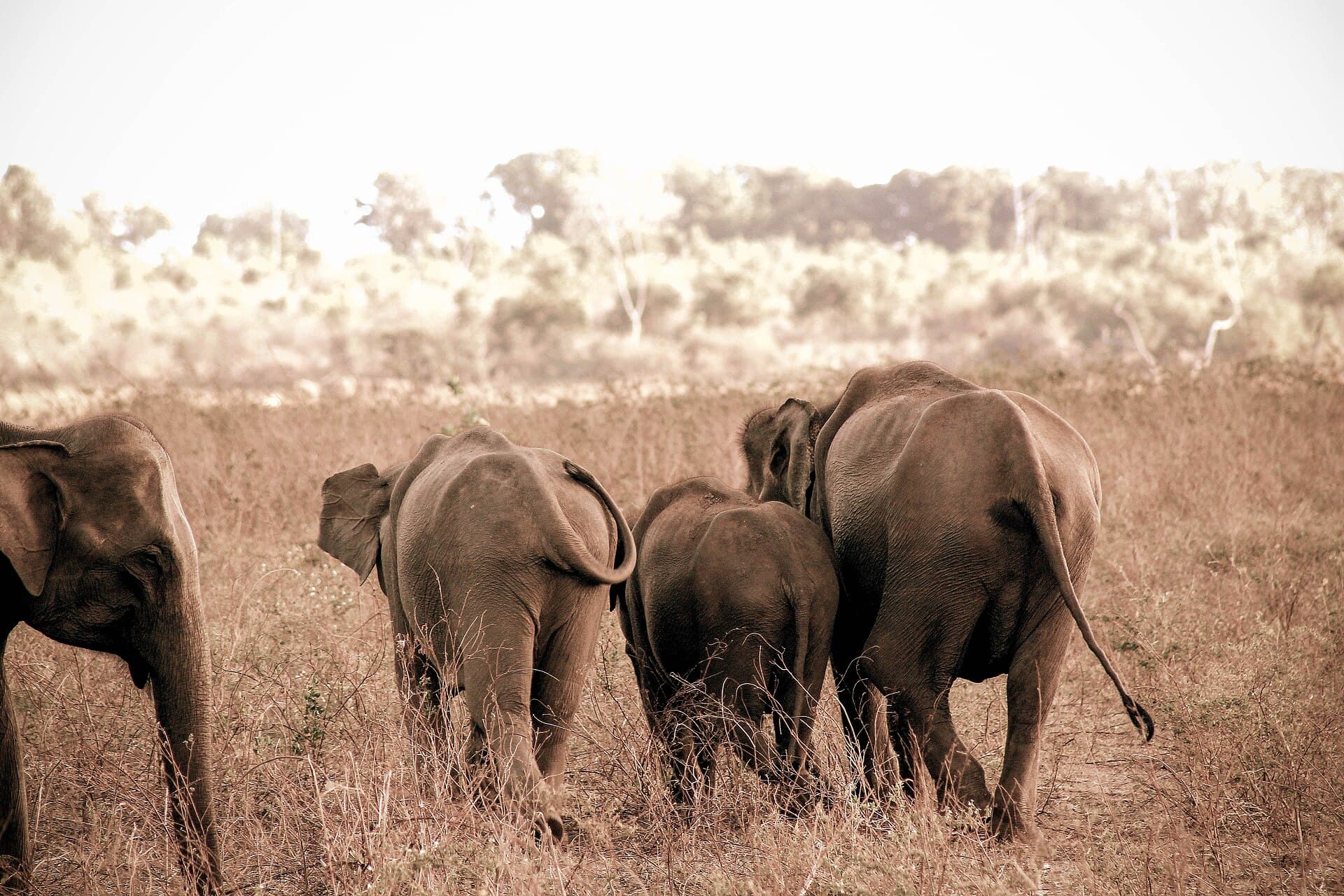
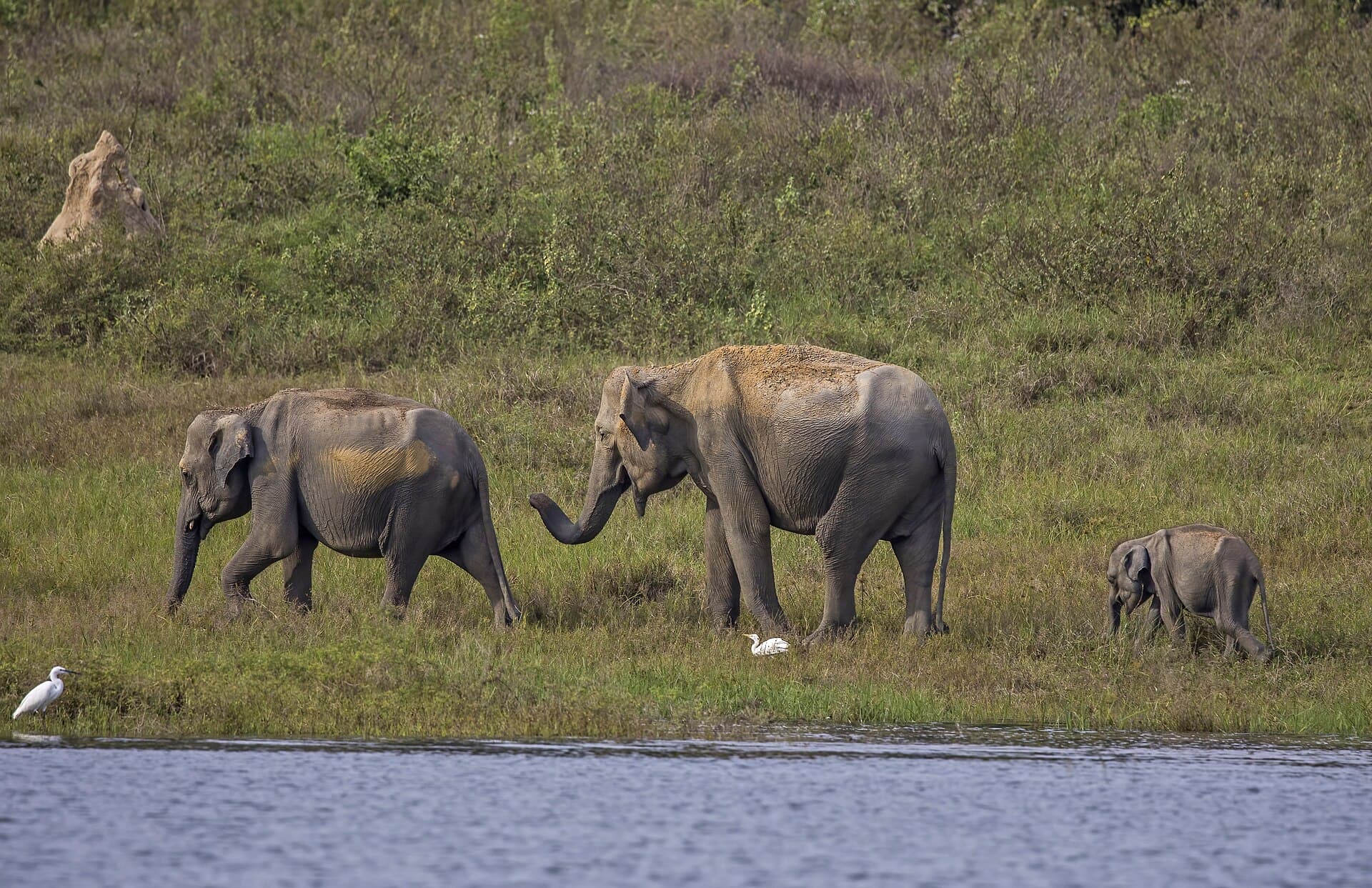
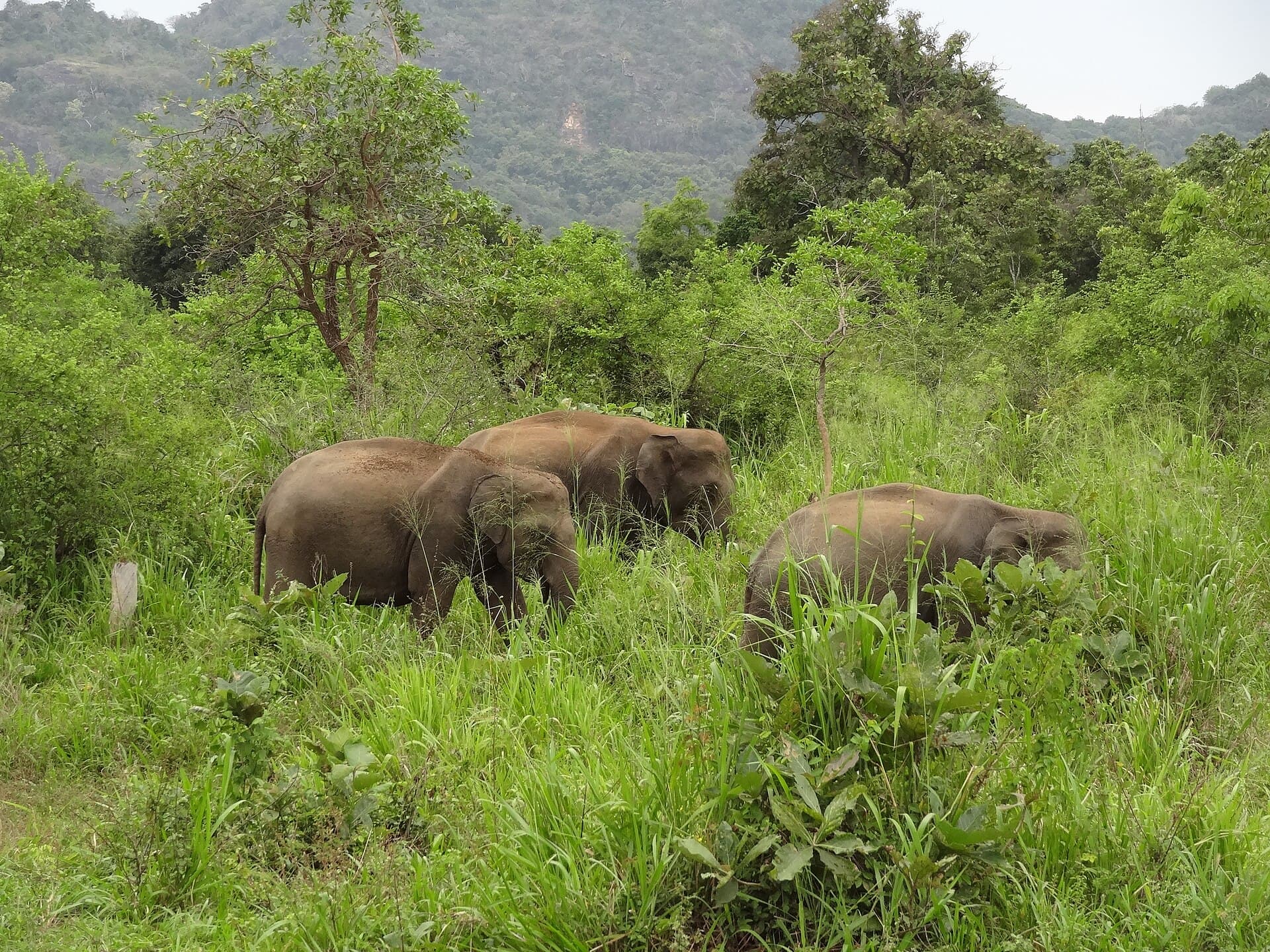
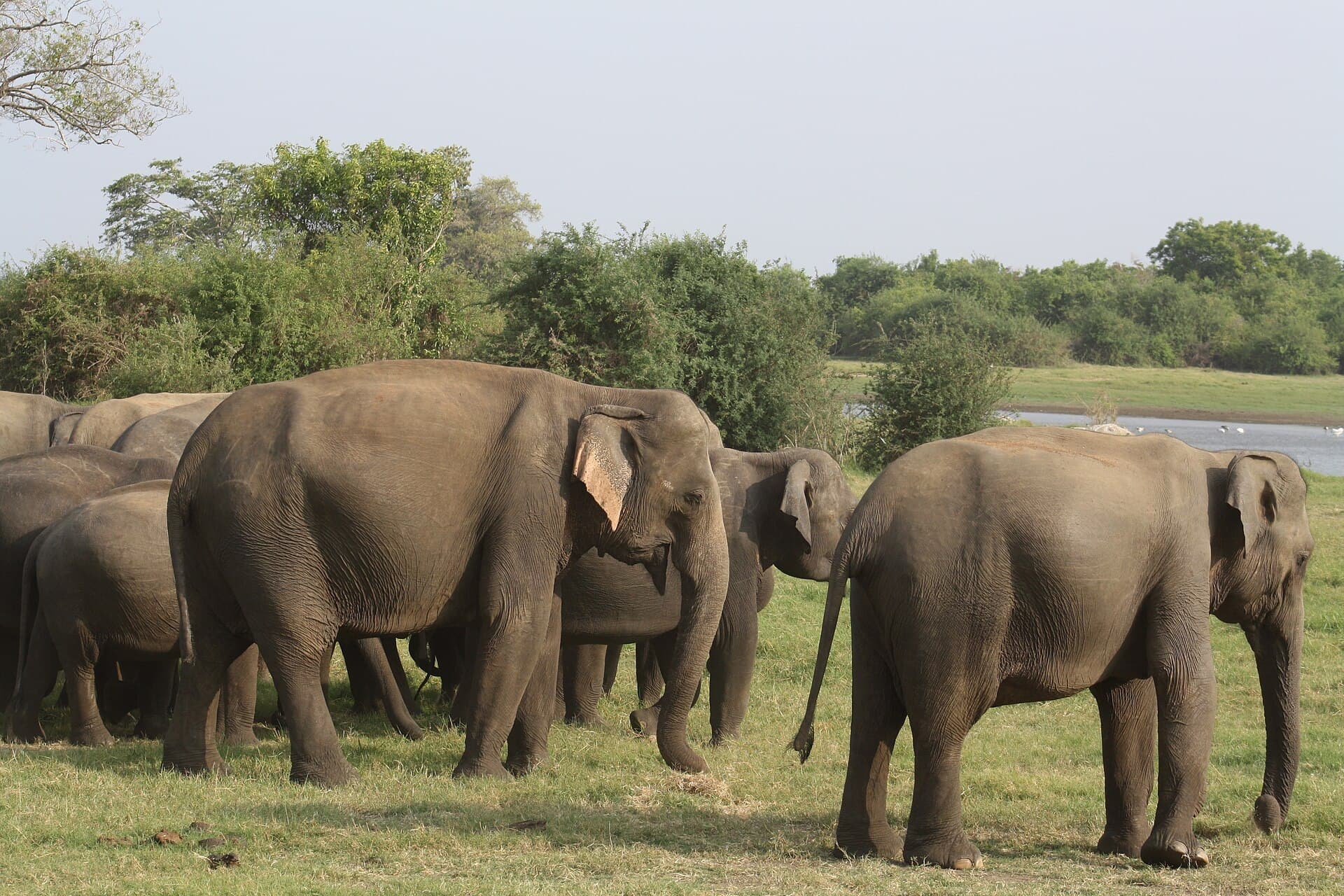
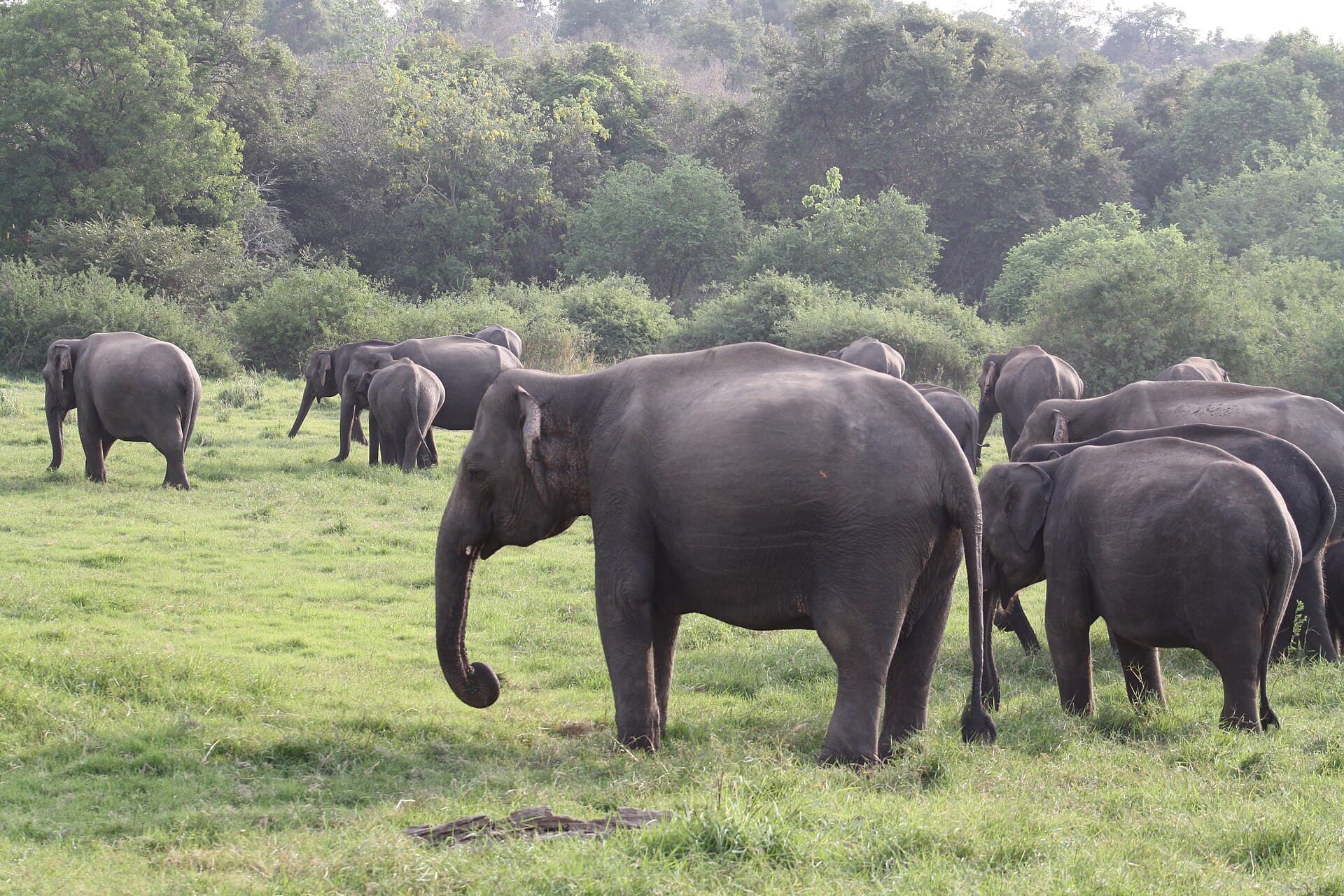
Kaudulla is built around its tank, an ancient reservoir that holds water and exposes grazing as the level drops. Elephants are the reason to come. Large gatherings form here through the dry months, and at the right point in the season you can watch multiple herds out on the open grass at once, with calves and sub adults among them.
What makes Kaudulla work is the same mechanism as Minneriya. The reservoir retains water when surrounding sources fail, the receding shoreline exposes fresh nutrient rich grass, and the elephants come for it. The difference is timing. Kaudulla generally takes over from Minneriya as the season progresses, which is why the two parks are best thought of as one system rather than as alternatives.
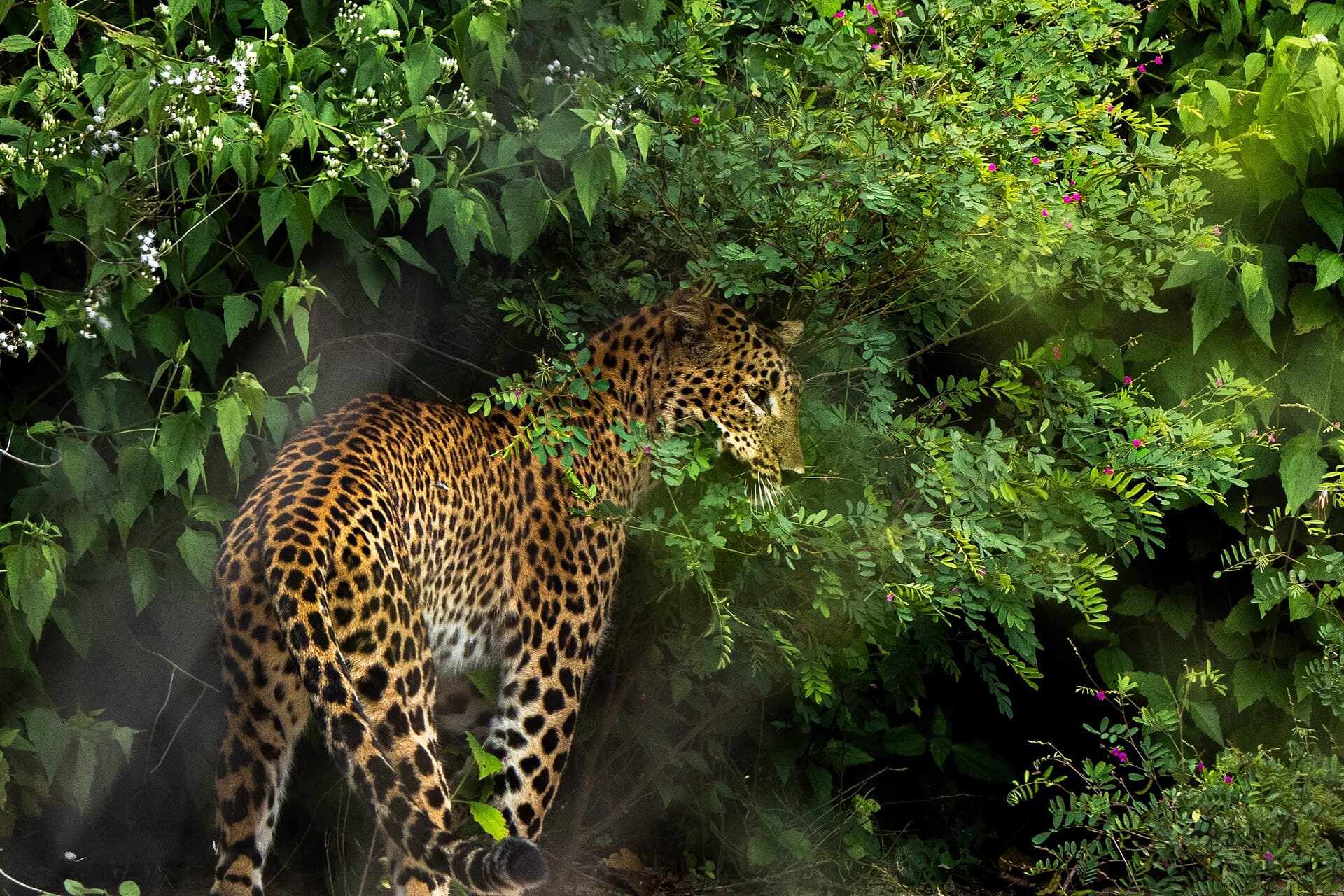
Beyond elephants the park holds spotted deer, sambar, wild boar, grey langur and toque macaque, with mugger crocodiles in the tank. Leopards and sloth bears are present but genuinely rare to see, and nobody visits Kaudulla for them.
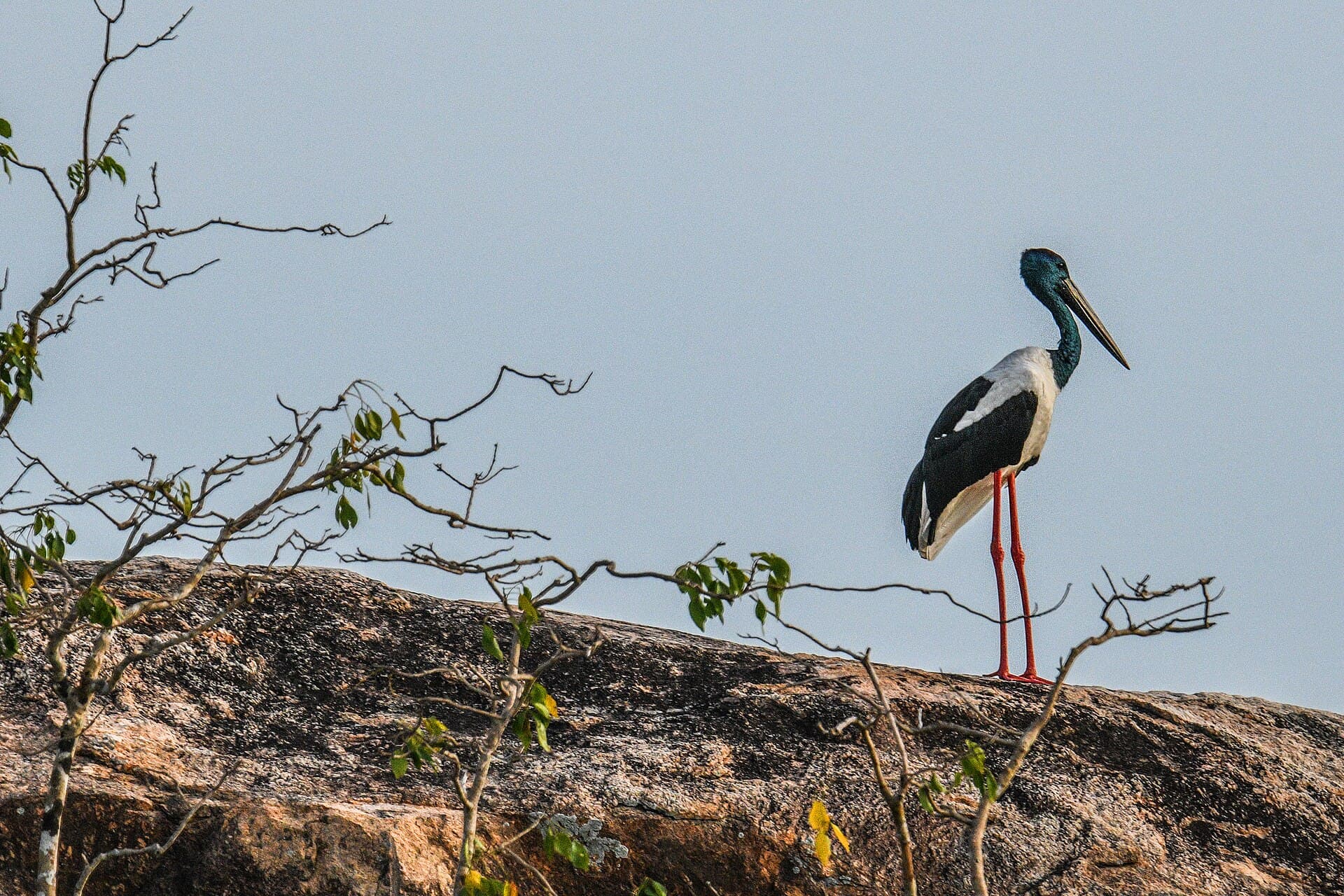
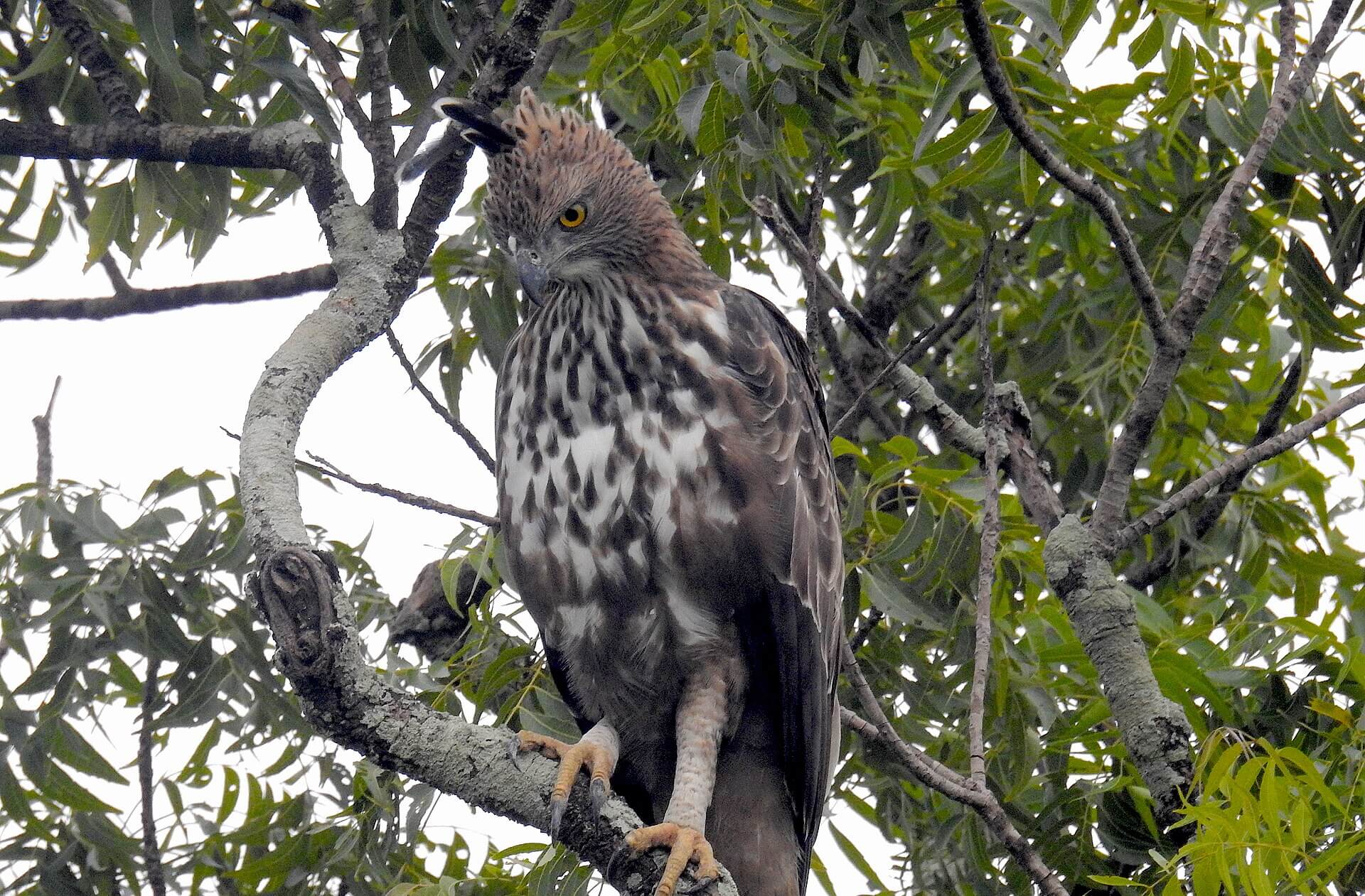
Birds do well around the water. Pelicans, painted storks, cormorants, herons and egrets work the shallows, and raptors hunt over the tank. Peafowl are common through the scrub.
The advice here is the same as at Minneriya. Position, cut the engine and watch. Herds settle when vehicles stop behaving like a threat.
Where Kaudulla sits in the elephant rotation
The elephants in this part of the island move on a seasonal circuit between three protected areas, and knowing the circuit is the difference between a great safari and a disappointing one.
Broadly, the herds gather at Minneriya from around July to September, shift to Kaudulla from roughly October to November, and move on to Hurulu Eco Park around December to January. The driver of the whole pattern is water and grazing. As one tank's shoreline stops producing, the animals move to the next.
This means Kaudulla has a clear window when it is the best of the three, and periods when it is the wrong choice. Booking Kaudulla in August because a guidebook recommended it, when the herds are still at Minneriya, is the most common way visitors waste a session here.
The dates shift year to year with the rains. An early monsoon moves everything forward, a late one holds the herds in place longer. No published calendar will be accurate for the week you happen to be travelling.
The practical approach is not to fix on a park name in advance. Decide you want to see the gathering, book a jeep with a driver who works these three parks daily, and let them tell you which gate to use. A driver who says the herds are at Minneriya this week rather than taking your Kaudulla booking regardless is the one you want.
What a Kaudulla jeep safari involves
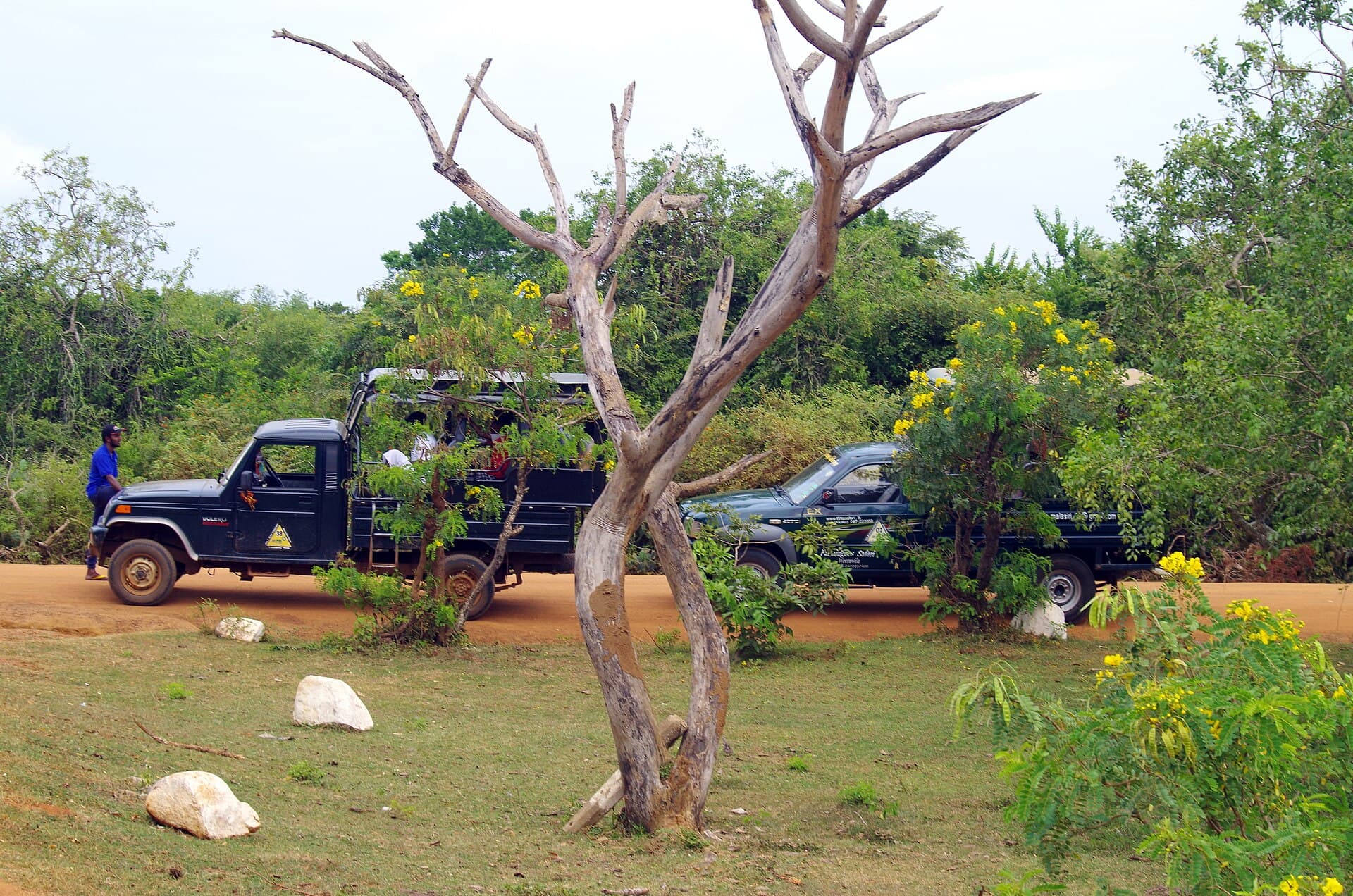
Safaris run morning and afternoon in open topped four wheel drive jeeps seating up to six passengers with a driver guide. A session runs roughly three to four hours including the drive to and from the gate.
For the gathering, take the afternoon. Elephants move out onto the exposed tank bed through the later hours, numbers build toward closing, and the light across the water in the final hour is the best of the day. Morning sessions are worth doing for general wildlife and birds but will rarely show you the herds at full strength.
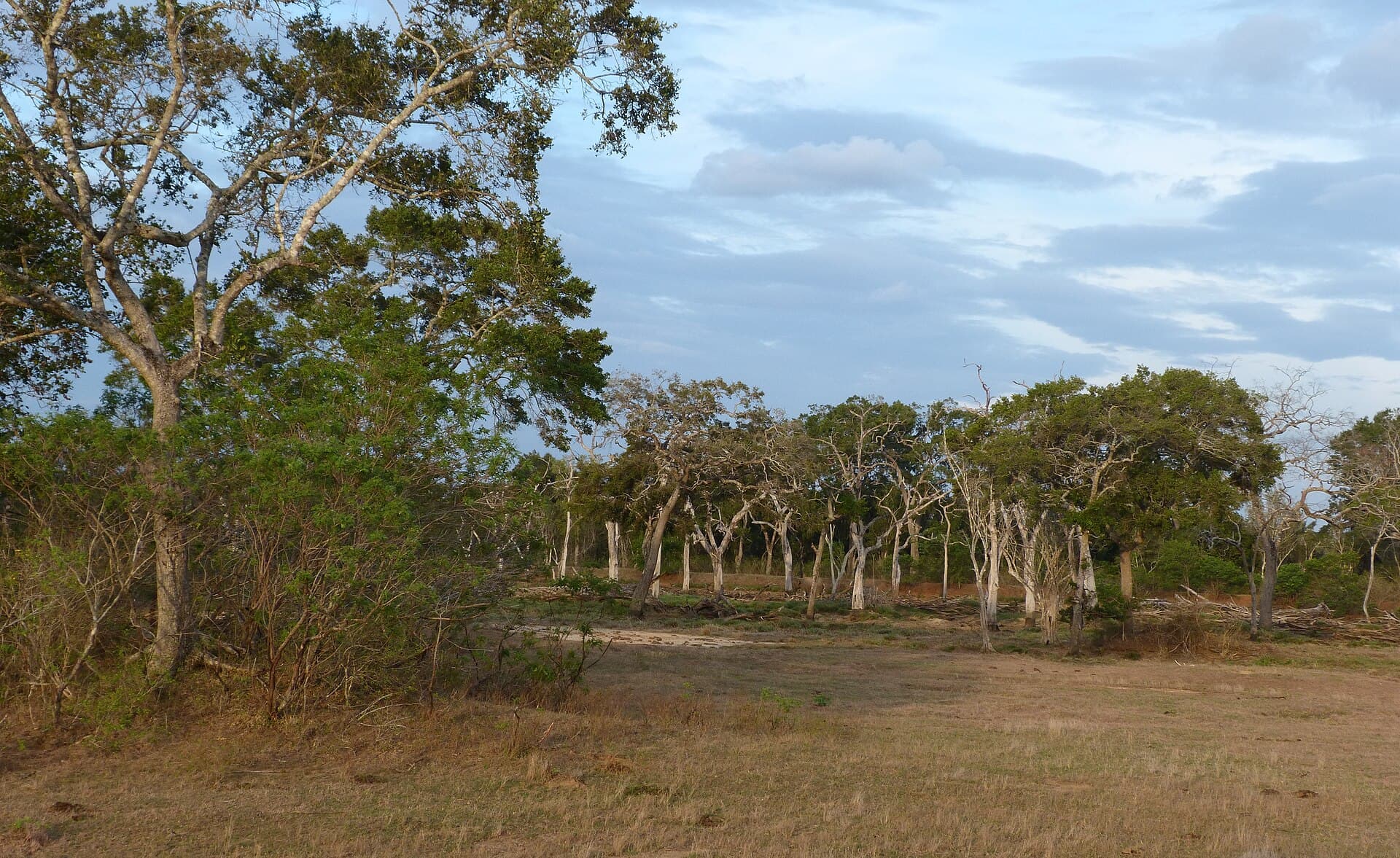
The drive in runs on dirt track through scrub and forest before opening at the tank. That transition from closed jungle to a wide grassland with elephants spread across it is the moment the trip is built around, and a good driver will hold position there rather than pushing to cover more ground.
Keep your distance and expect your driver to do the same. These are wild herds with young animals present, and jeeps that crowd them cause real stress and real risk. Engines off, sensible spacing, and let the herd carry on. It is both the right thing to do and the way you get the better photographs.
Kaudulla is quieter than Minneriya even in its peak weeks, which is a genuine point in its favour. You are less likely to be sharing the tank edge with a long line of vehicles.
Kaudulla, Minneriya or Hurulu
The three parks sit within a short drive of each other near Habarana and the choice between them is almost entirely about timing.
Minneriya is the famous one and the park most associated with the Gathering, the largest seasonal congregation of Asian elephants anywhere. Its window is roughly July to September.
Kaudulla works on the same principle around its own tank and generally holds the main concentration from around October into November. It is a little quieter than Minneriya and the tank setting is arguably prettier.
Hurulu Eco Park is drier scrub forest rather than open grassland and tends to come into its own around December and January, or whenever heavy rain makes the two tanks less productive.
Because the animals move between all three, operators in this area will often shift a booking depending on where the herds actually are. That flexibility is a feature rather than a problem. If your driver suggests a different gate from the one you had in mind, that is local knowledge working in your favour.
The mistake to avoid is booking a park name months ahead and insisting on it. Book the jeep and the driver, keep the park open, and decide in the last day or two. Every experienced operator in Habarana works this way and it is the single biggest factor in whether you see the gathering or a few scattered elephants.
Getting there and planning your day
Kaudulla is in the north central dry zone, part of the cluster of parks around Habarana, which makes it easy to combine with the Cultural Triangle sites.
Habarana is the most convenient base and sits roughly in the middle of the three parks, which is exactly what you want given that you may not decide on the gate until the day before. Sigiriya, Dambulla and Polonnaruwa all work and are within a reasonable drive.
Sigiriya is the popular choice for people wanting the rock fortress and a safari in one day. Climb early, take an afternoon jeep session, which also happens to be the better session for the elephants. Polonnaruwa suits anyone with the ancient city on their list.
Colombo is around four to five hours by road, Kandy roughly three. The park fits into the standard Cultural Triangle circuit without requiring a dedicated trip.
For an afternoon safari expect an early afternoon pickup. Bring sunscreen, a hat, sunglasses and water, because the tank area is completely open with no shade and the afternoon sun is strong. A light layer is useful for the drive back after sunset.
Binoculars help with the waterbirds, though the elephants need no help. For photography, a lens around 200mm to 300mm covers herd shots comfortably, and a wider lens is genuinely worth having because the scale of a gathering spread across open grassland is a shot a long lens simply cannot take.
Book ahead in the dry season. This is the busiest period in the Cultural Triangle.
Frequently Asked Questions about Kaudulla National Park Safaris
When is the best time to visit Kaudulla?expand_more
Roughly October to November, when the herds move here from Minneriya as the season turns. Outside that window the elephants are usually at Minneriya or Hurulu instead, so the timing matters more than anything else about this park.
What is the elephant rotation?expand_more
The herds circuit between three parks following water and grazing. Broadly Minneriya from July to September, Kaudulla from October to November, and Hurulu Eco Park from December to January. The dates shift each year with the rains.
Should I book Kaudulla or Minneriya?expand_more
Do not fix on either in advance. Book a jeep and a driver who works all three parks daily, keep the park open, and decide in the last day or two based on where the herds actually are that week.
Morning or afternoon safari?expand_more
Afternoon for the gathering. Elephants move onto the exposed tank bed through the later hours, numbers peak toward closing, and the light across the water in the final hour is the best of the day.