National Park
Wasgamuwa National Park
Wasgamuwa is where you go to see elephants that have never learned to ignore a jeep. Bordered by the Mahaweli and Amban rivers, it is large, genuinely off the tourist circuit, and the wildlife behaves...
Wasgamuwa is where you go to see elephants that have never learned to ignore a jeep. Bordered by the Mahaweli and Amban rivers, it is large, genuinely off the tourist circuit, and the wildlife behaves...
Wasgamuwa is nestled in the Matale and Polonnaruwa districts, bounded by the Mahaweli River and the Amban River. It is known for its high biodiversity and ancient ruins.Wildlife Safari ExperienceBecause of its remote location, a jeep safari tour in Wasgamuwa is perfect for those looking to escape the tourist crowds. The safari jeep experience here is slow-paced and immersive, allowing for deep exploration of the dry-zone wilderness.Wildlife HighlightsWasgamuwa is famous for its 'Marsh Elephants', which are larger than those found in other parks. It is also an excellent place to see the Sloth Bear and the Purple-faced Leaf Monkey.Landscape & EcosystemThe park features primary and secondary dry zone forests, riverine forests, and grasslands. Ancient irrigation tanks dotted around the park add a touch of history to the landscape.Best Time to VisitThe best time to visit is from January to March, although elephant sightings are good throughout the year.
Total Area
393 sq km
Established
1984
City
Polonnaruwa
Coordinates
7.7214000, 80.9572000
No jeeps available yet
Check back soon for safari jeeps at this destination.
The elephants at Wasgamuwa are the point, and they are different from the elephants you meet elsewhere. The park holds a herd of around a hundred and fifty, and because so few vehicles come through, these animals have had very little exposure to jeeps. They have not learned to treat a vehicle as furniture. They watch you, they react, and they behave as wild elephants behave rather than as animals that have grown used to an audience. That is the draw and it is also the reason to take your driver seriously here. Unhabituated elephants require more distance and more care than the relaxed herds at Udawalawe. Marsh elephants range the Mahaweli river area in particular, and the two rivers that border the park shape everything about where animals are found. Beyond elephants the park holds around twenty three mammal species, including sloth bear, leopard, spotted deer, sambar, wild boar, water buffalo, grey langur and purple faced langur. Leopards and sloth bears are present in genuinely wild conditions and sightings are rare but real. The bird list runs to more than a hundred and forty species, with the river margins and tanks producing well. Sudu Kanda, the white mountain at 470 metres, is the highest point in the park and a landmark on most routes.
Most safari parks in Sri Lanka show you habituated wildlife. Decades of daily jeep traffic have taught the animals at Yala, Udawalawe and Minneriya that vehicles are harmless and boring, and they carry on grazing while you photograph them from twenty metres. Wasgamuwa has not had that traffic. The elephants here are genuinely wild in their behaviour, and the encounter is correspondingly different. They will notice you, assess you, and often move away. Sometimes they will make it clear that you are too close. This is what wild elephant behaviour actually looks like, and for a lot of visitors it is the most memorable wildlife experience they have in Sri Lanka precisely because it does not feel staged. It also means the rules matter. Keep distance, keep noise down, and do not ask your driver to push closer for a photograph. A driver who knows this park will hold well back, keep the engine running and give the animals an exit route. If you are the kind of visitor who wants to be within ten metres of an elephant, book Udawalawe instead. You will both be happier. The upside of that caution is real. Watching a herd move through open country on its own terms, with no other vehicles anywhere, is worth considerably more than a close photograph of an animal that has stopped caring. Book a driver who works Wasgamuwa specifically rather than someone running an occasional trip out from the Cultural Triangle.
Compare parks before you book. Each one suits a different trip.
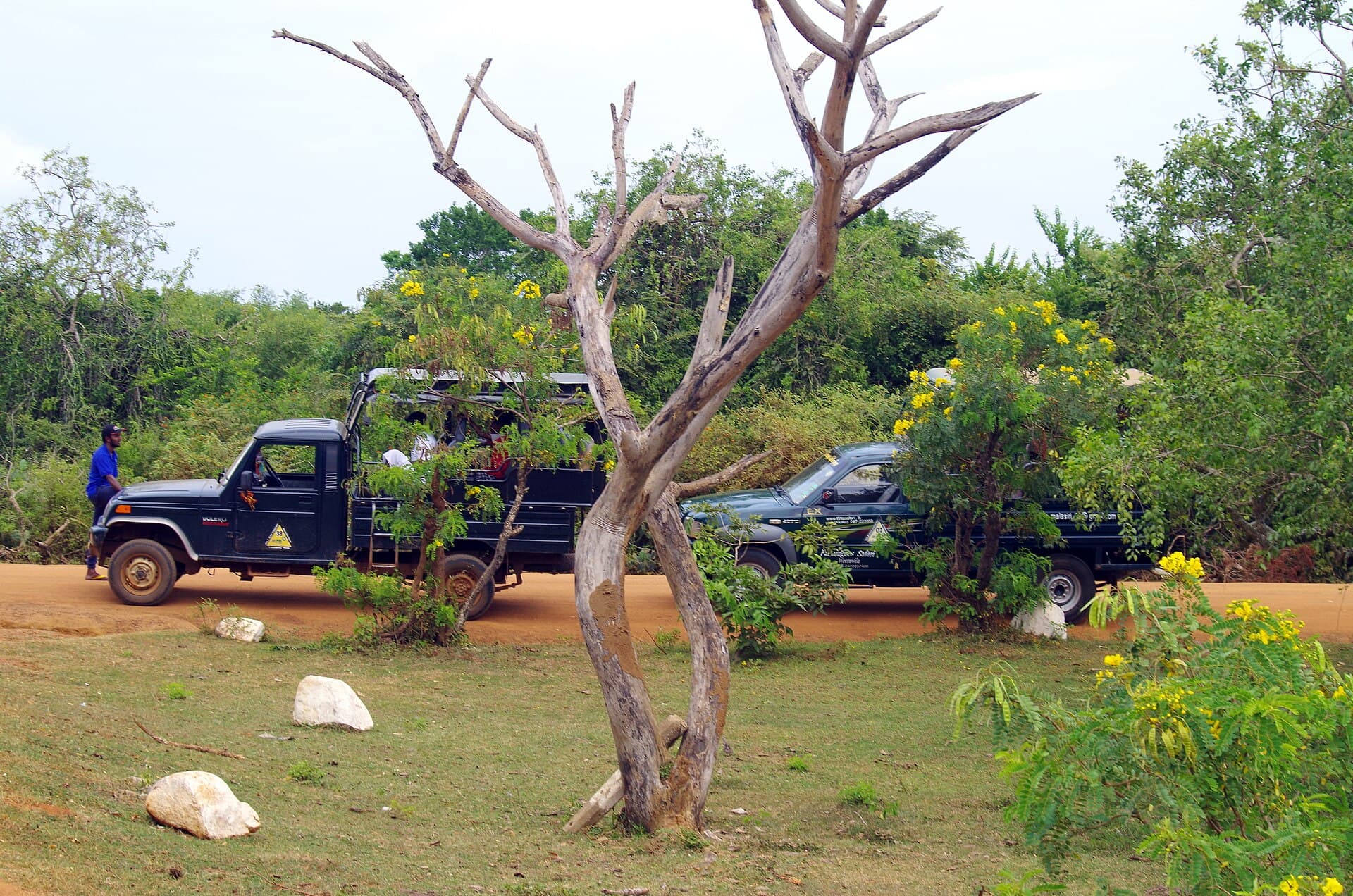
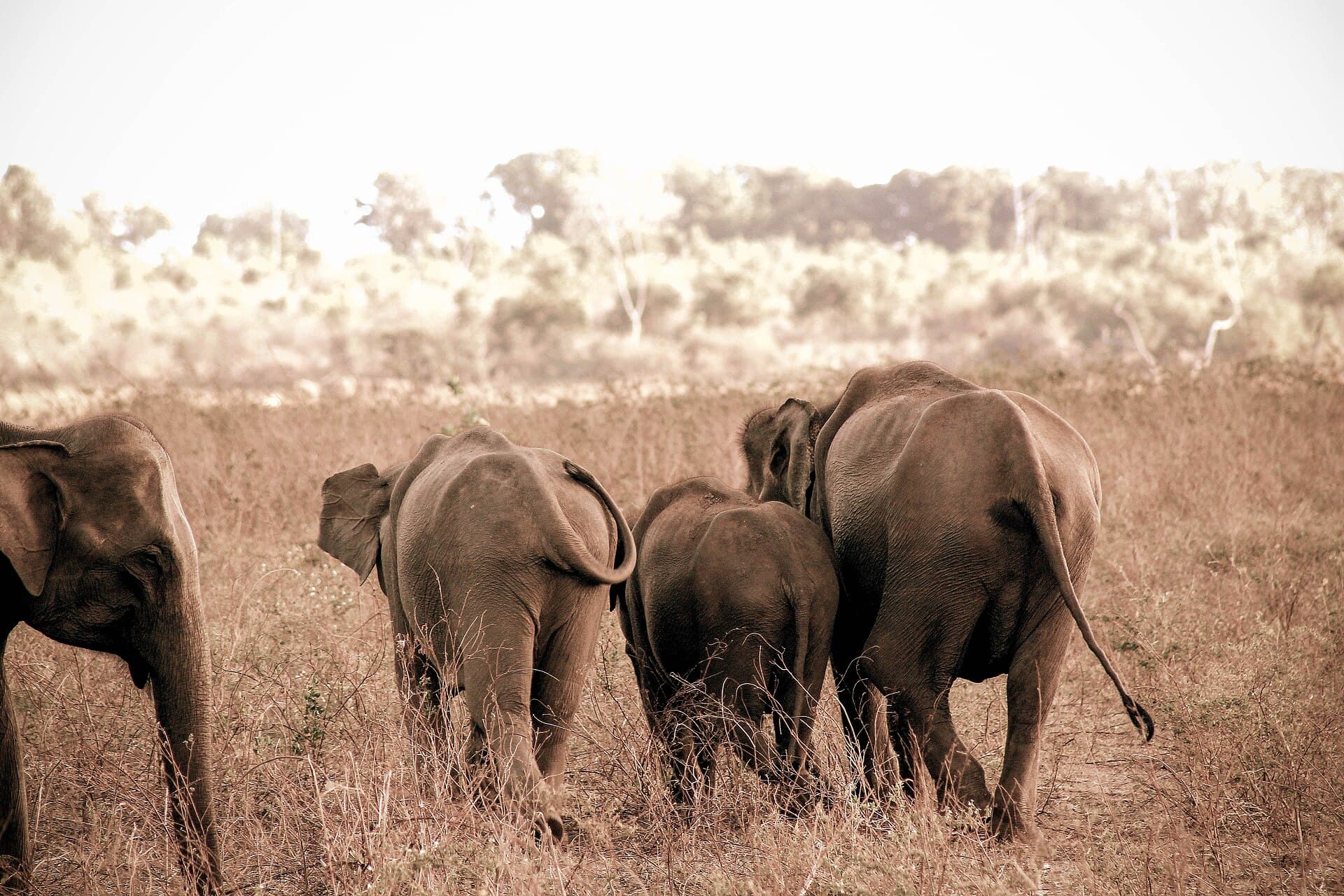
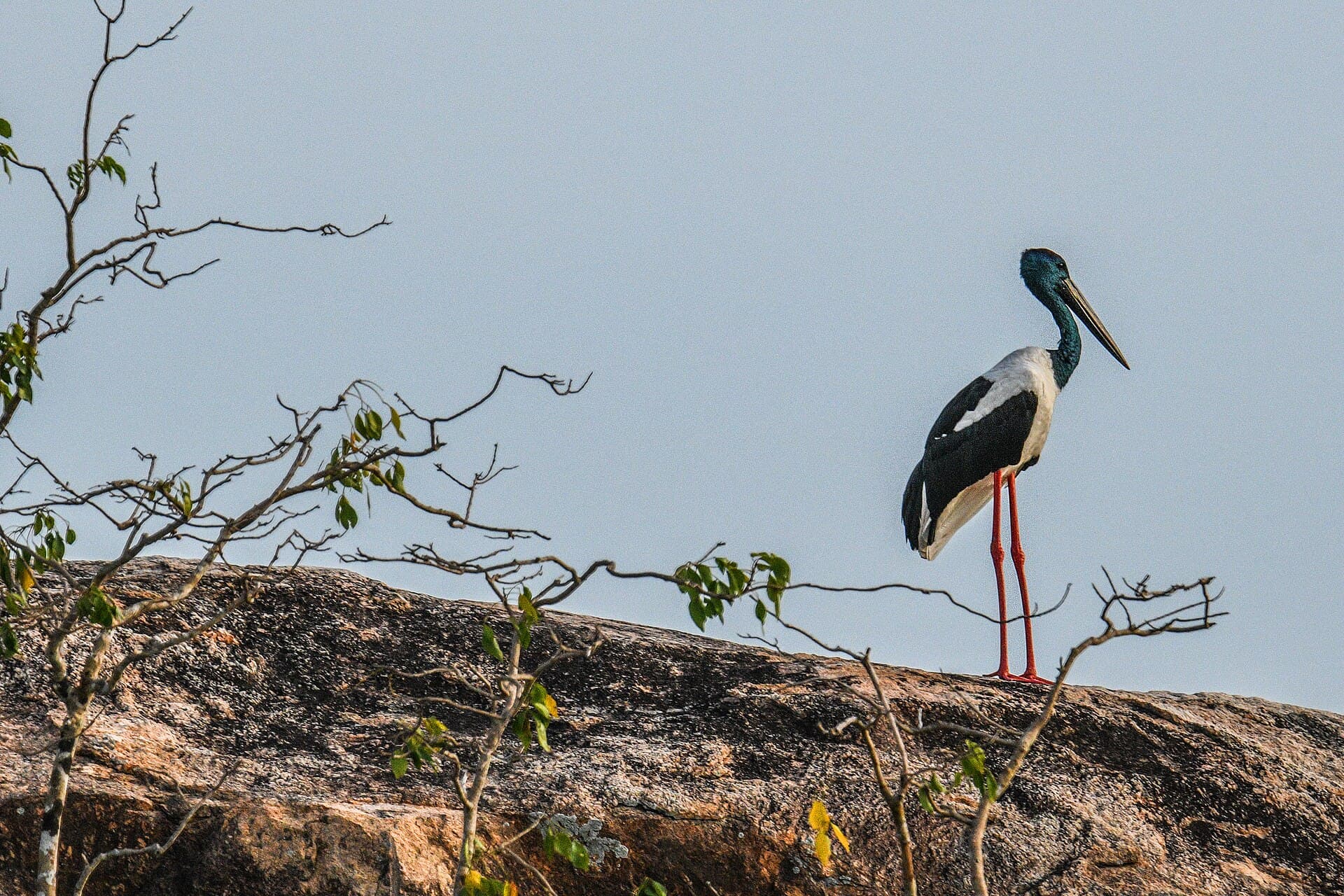
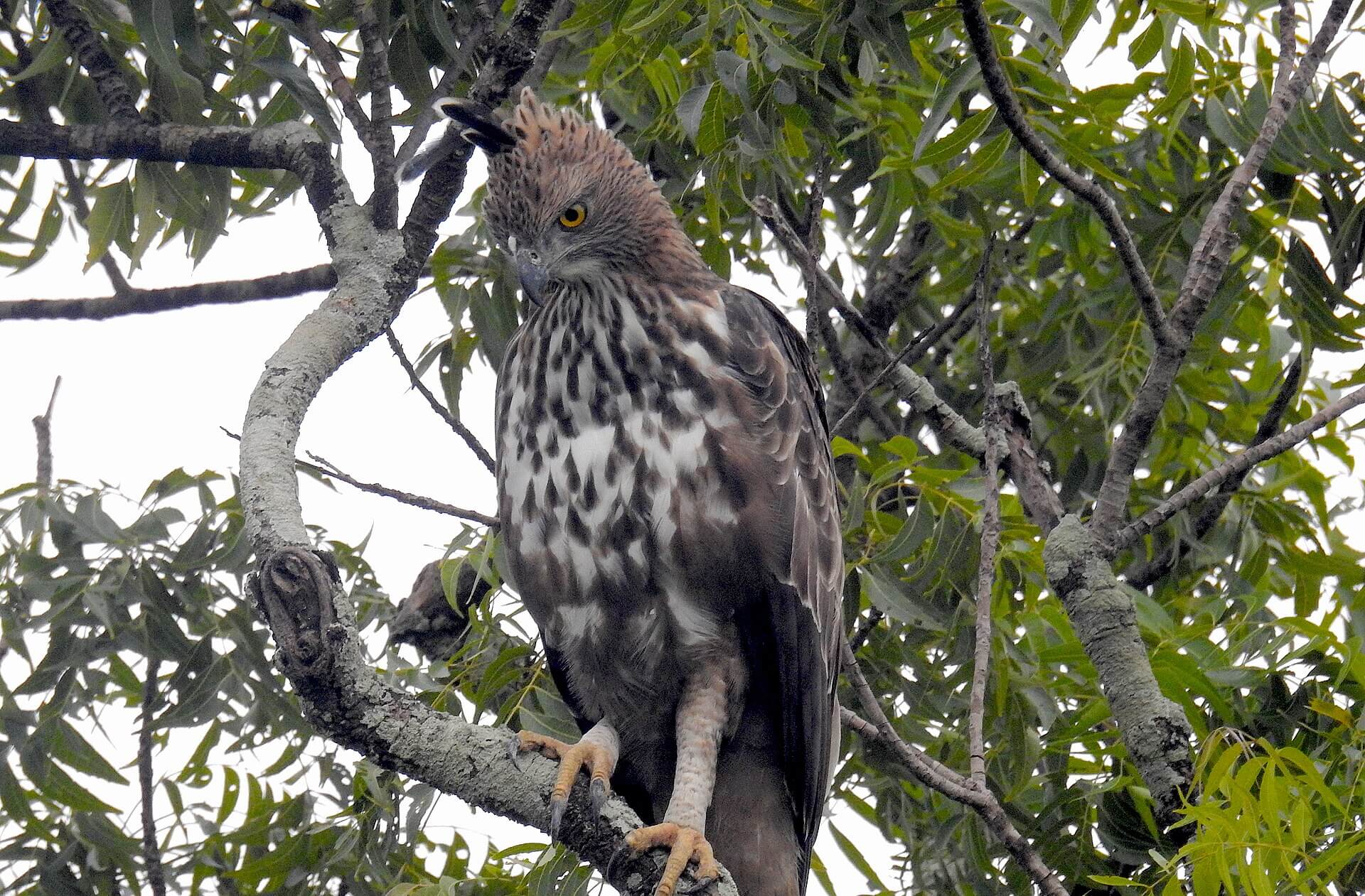
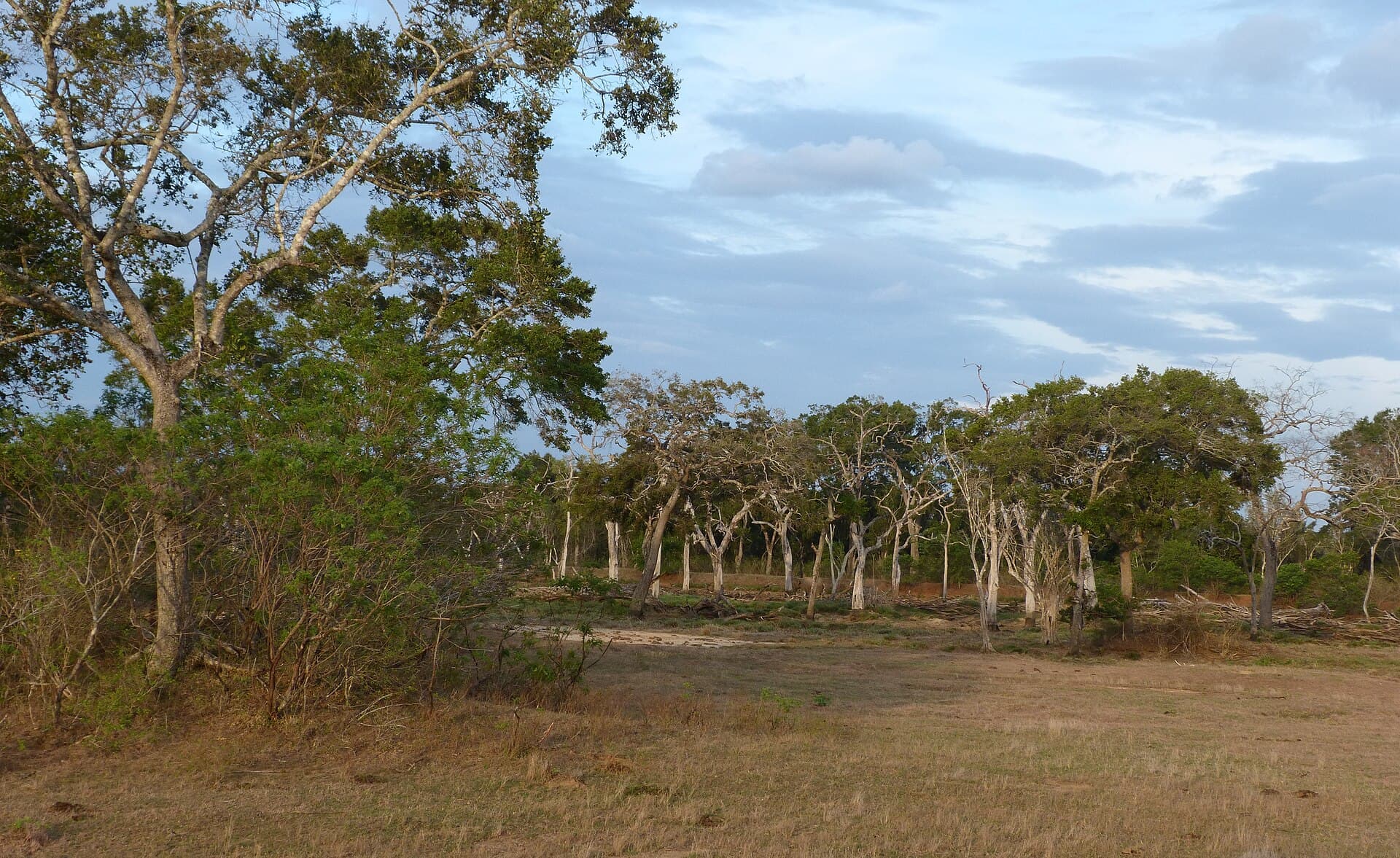
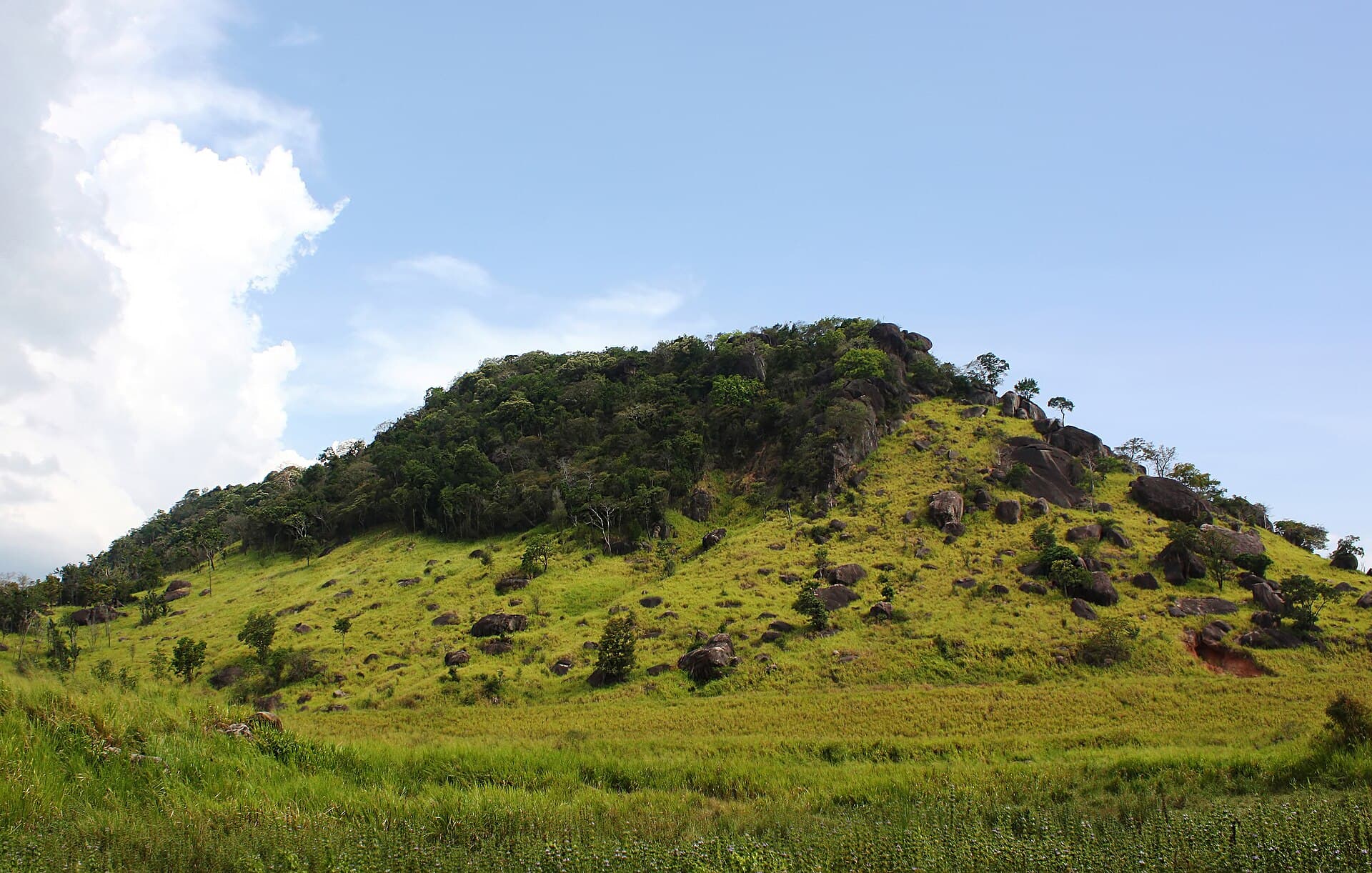
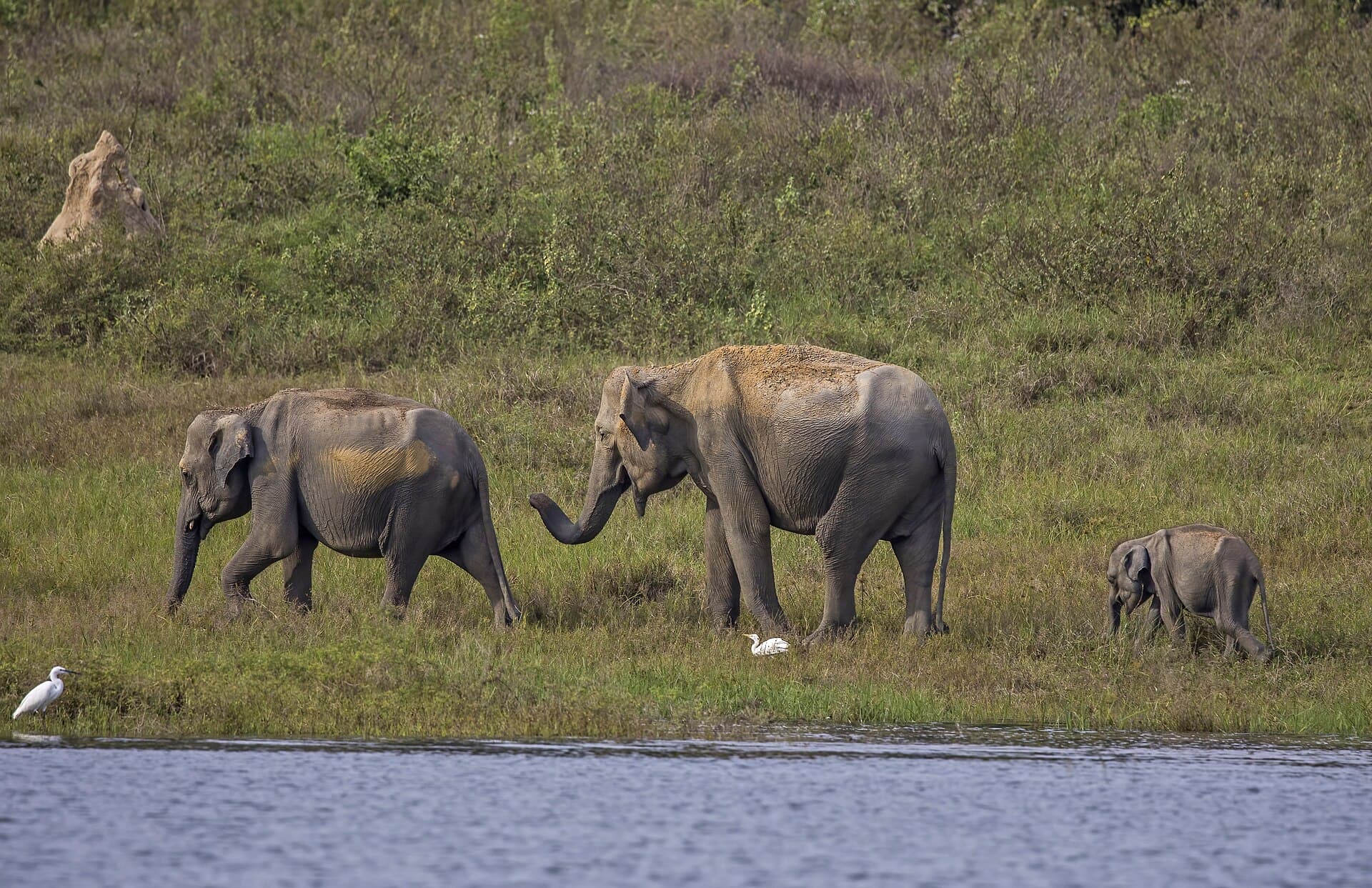
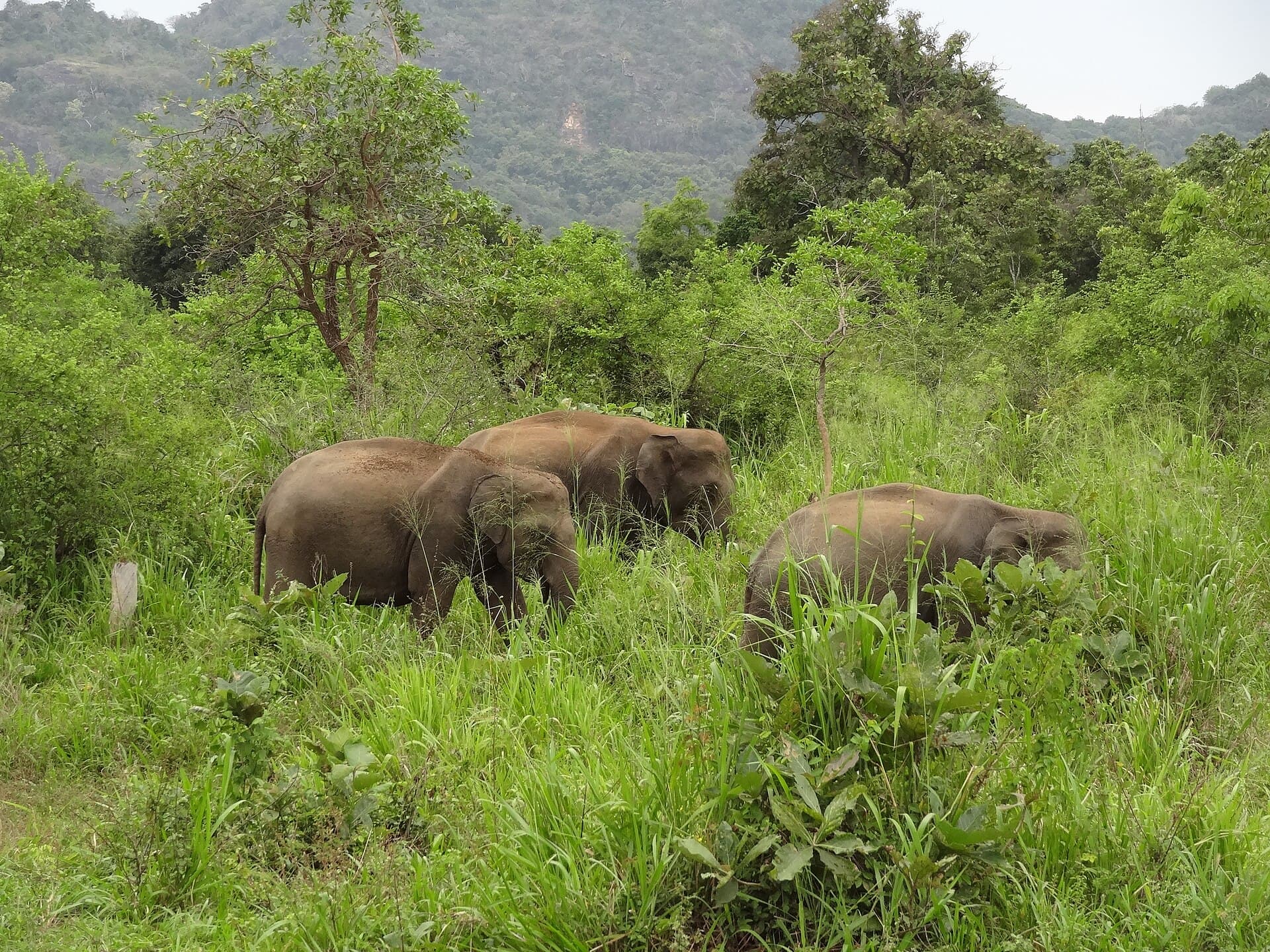
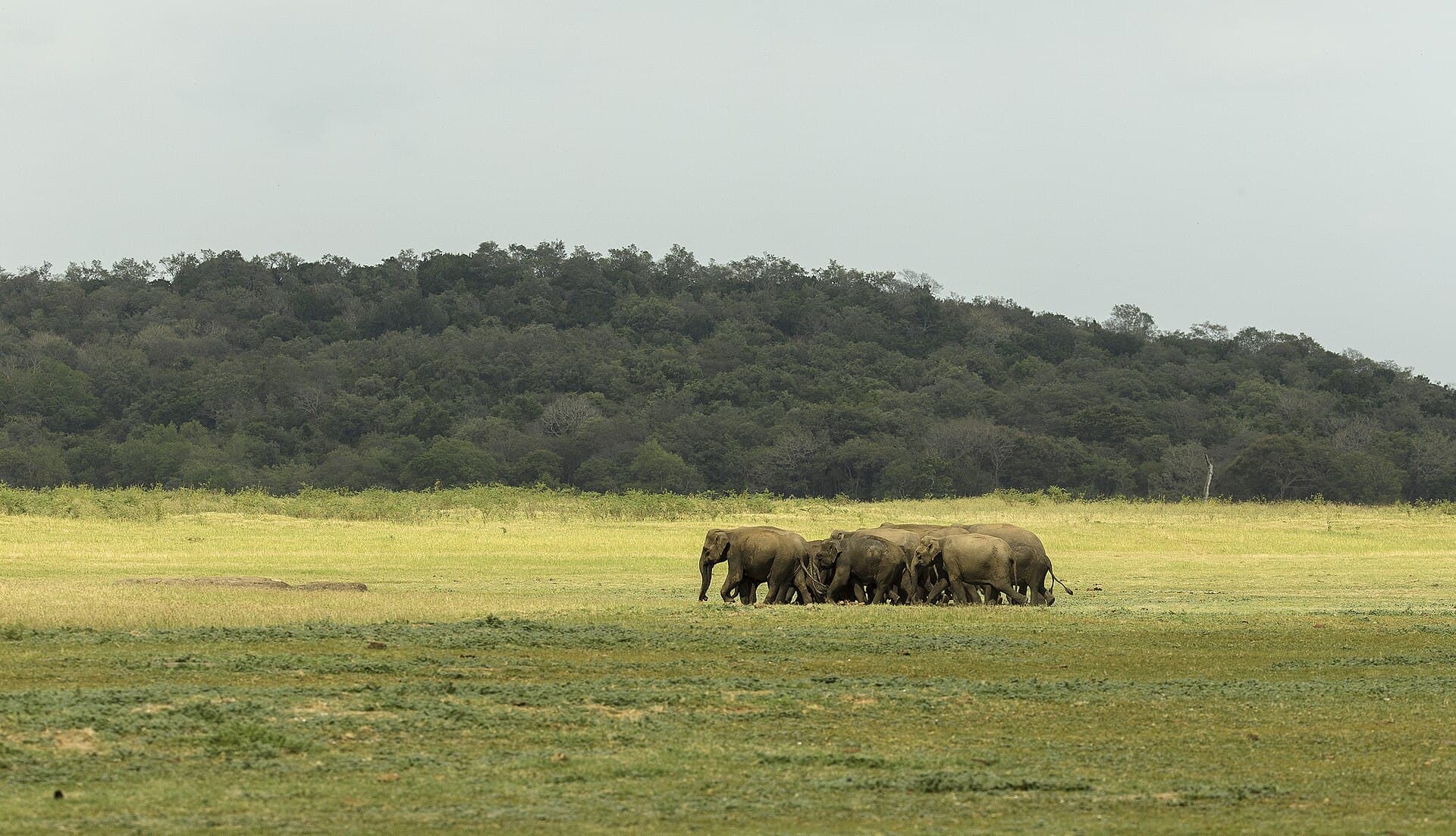
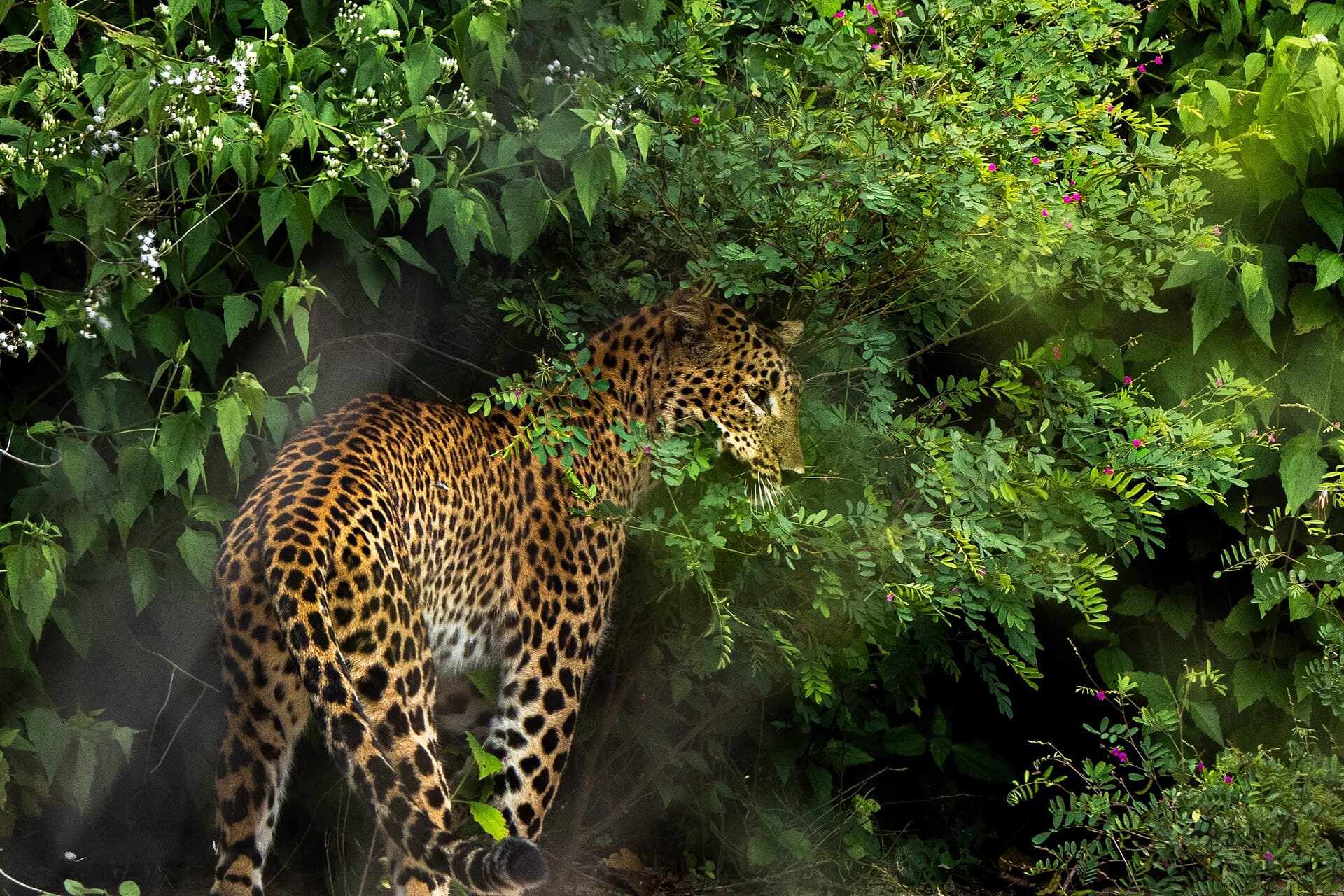
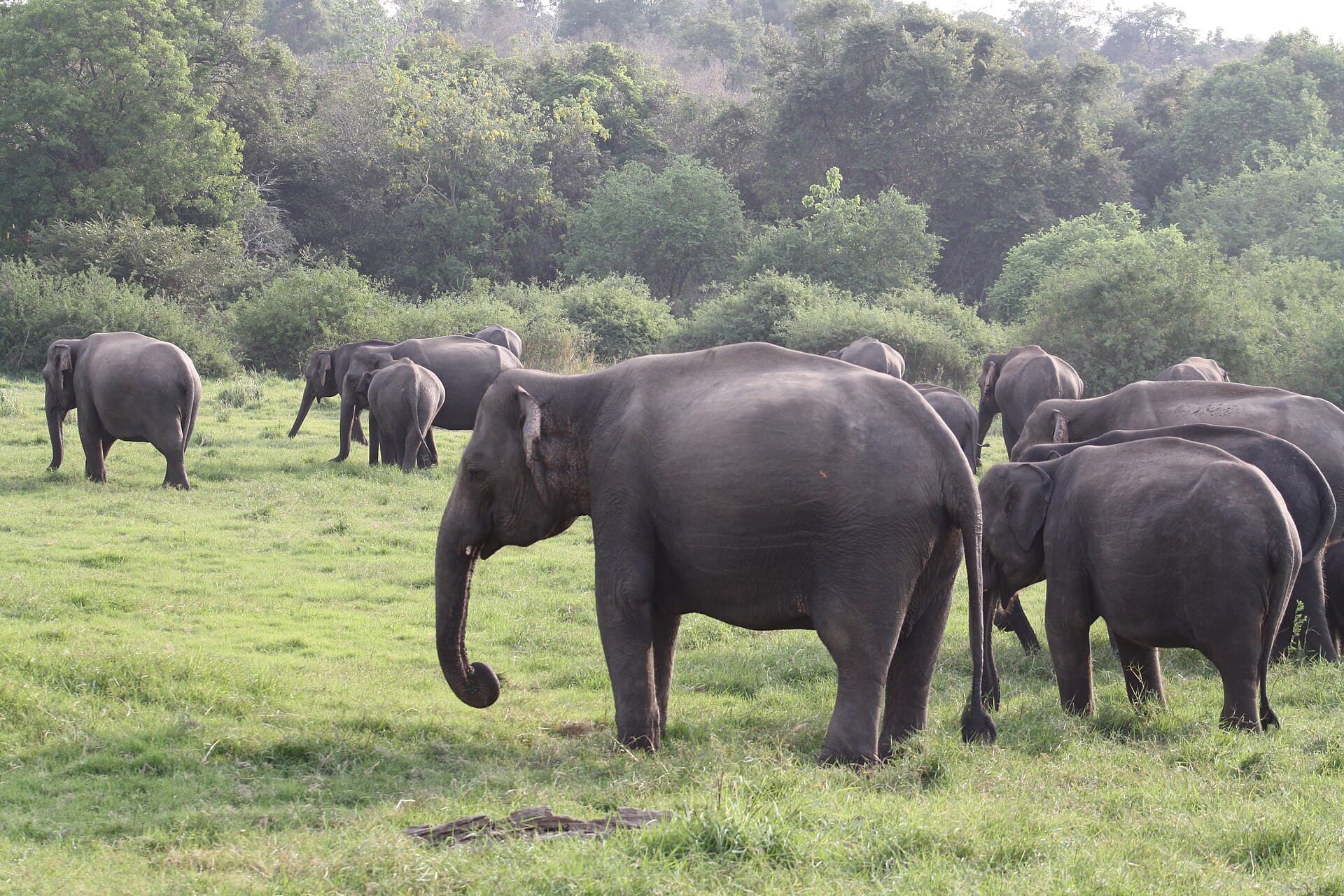
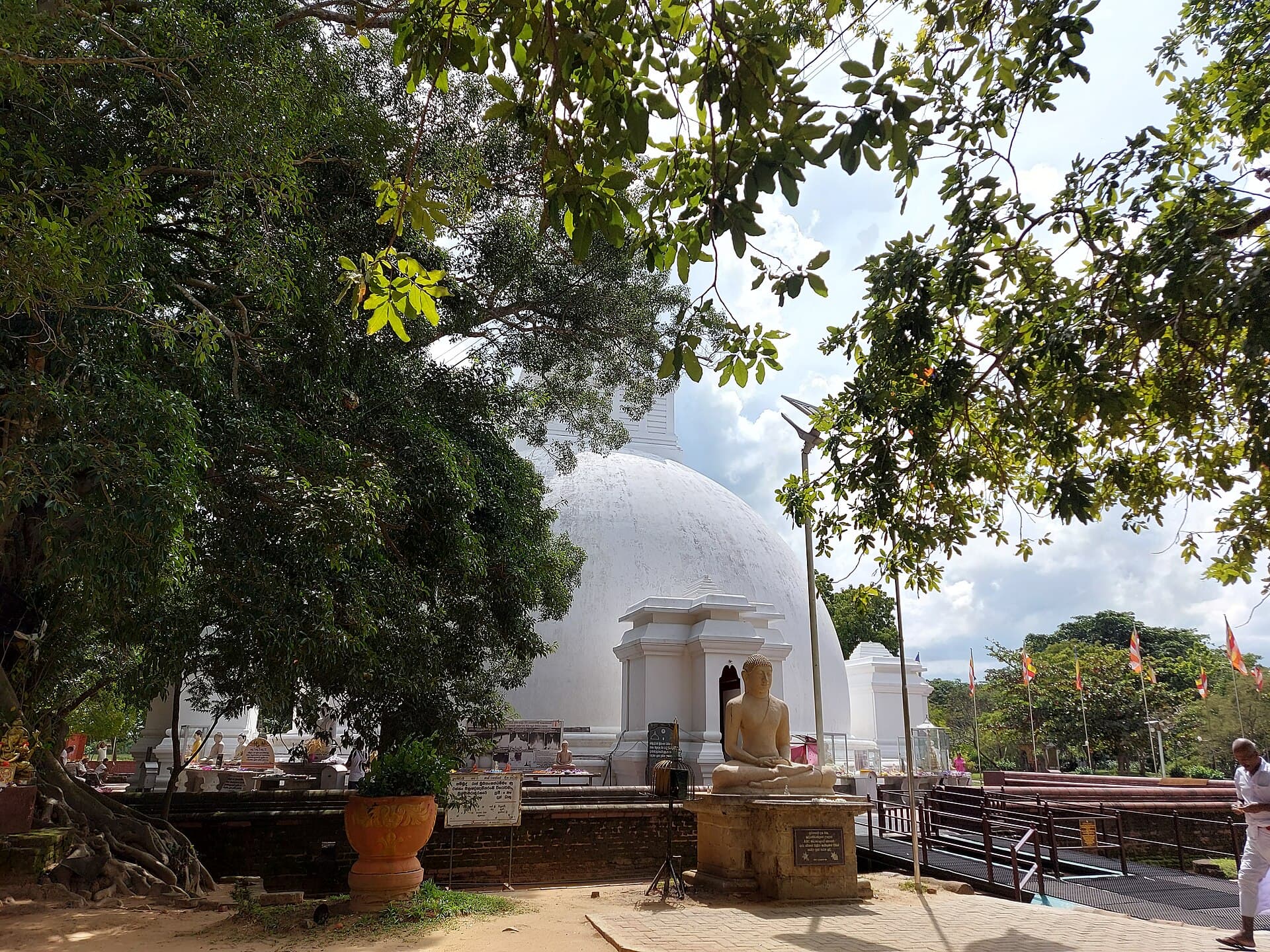
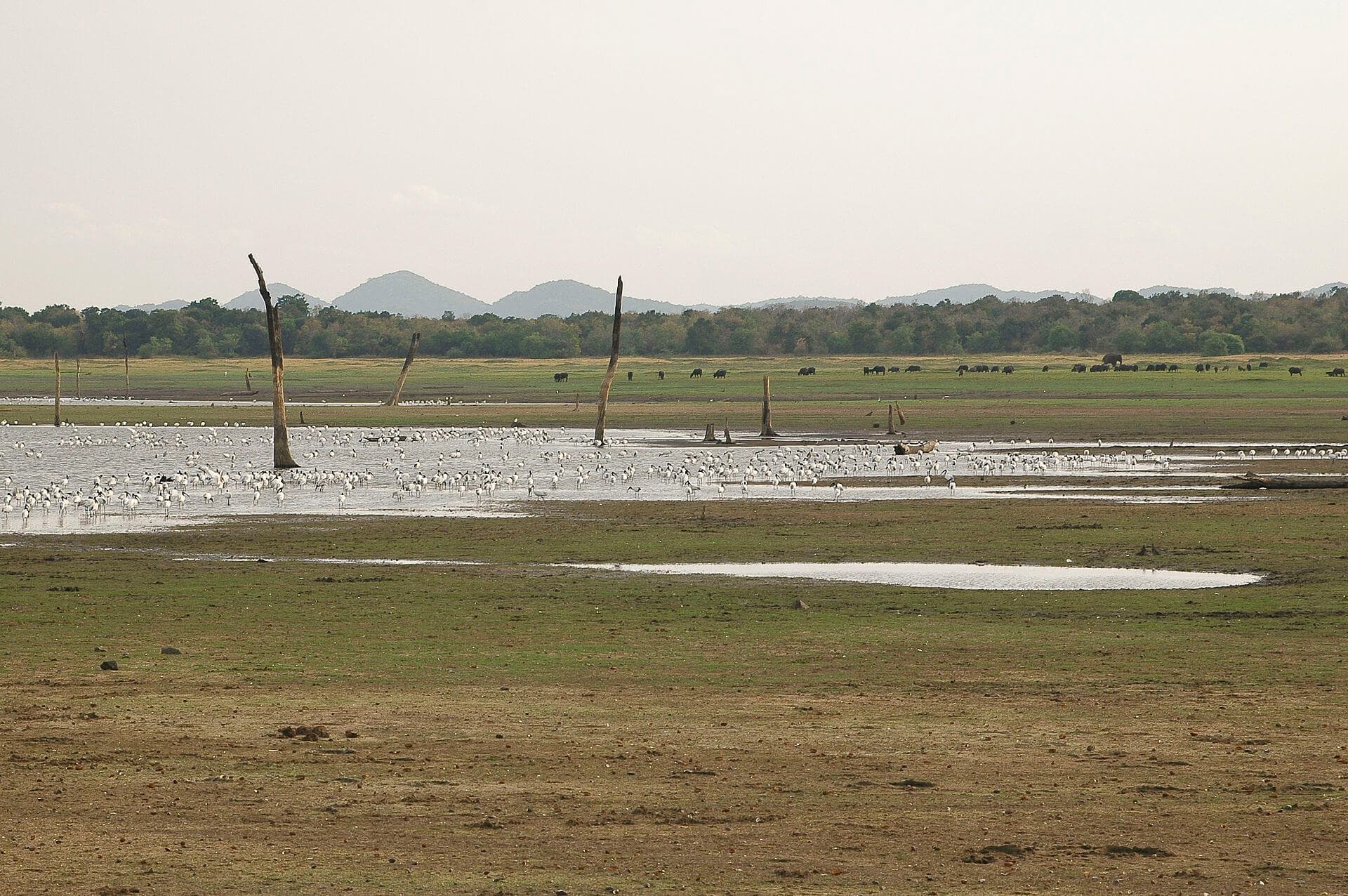
Wasgamuwa sits between the Mahaweli and Amban rivers across the Matale and Polonnaruwa districts, and covers around 36,900 hectares. The rivers define it. They set the boundaries, they hold water through the dry months, and they concentrate wildlife along their margins when the interior dries out. The terrain is dry zone forest, scrub and open grassland with river flats and tanks scattered through it. Sudu Kanda, the white mountain, rises to 470 metres and is the highest point in the park, giving the landscape a backdrop that the flatter dry zone parks lack. The marsh elephant range along the Mahaweli area is a particular feature and worth asking your driver about, because the river flats are where a lot of the best sightings happen. Practically, this is a large park with long driving distances and rough tracks. It is not a place for a rushed session. A half day covers a fraction of it, and a full day gives your driver room to work the river margins properly and reach the areas where the animals actually are rather than the nearest accessible loop. Expect real four wheel drive work. Expect to be thrown around. Expect stretches with nothing happening, because a park this size with this little traffic does not deliver constant action. What it delivers is a genuine sense of wilderness, which is increasingly hard to find on this island.
The commonly recommended window is January to March, when conditions are driest in this part of the country and animals concentrate around the rivers and remaining water. As with every dry zone park, the mechanism is simple. Less water in the interior means animals come to the rivers and tanks, the vegetation thins, and your driver knows where to look. In the wetter months the water spreads out, the animals disperse across a very large park, and both sightings and track conditions get harder. Sessions run morning and afternoon. Morning gives the coolest air and the most movement, and on a park this size an early start also buys you more productive hours before the heat shuts activity down. Afternoon puts better light on the river flats and the Sudu Kanda backdrop. Set expectations honestly before you go. Wasgamuwa is not a numbers park. You will not see the volume of animals you would at Udawalawe, and you will not get the near guaranteed elephant encounter. What you get is a park with almost no other vehicles, wildlife behaving naturally, and a landscape that feels genuinely remote. If that trade appeals, this is one of the best safaris in Sri Lanka. If you need a reliable headline sighting from a single session, it is the wrong park and you should book Udawalawe or Minneriya.
Wasgamuwa lies inland across the Matale and Polonnaruwa districts, away from every major tourist route, which is exactly why it stays quiet. Polonnaruwa is the most practical base for most visitors, putting the ancient city and the park on the same leg of a trip. There are also lodges and camps closer to the park boundary, and for a full day session staying nearby is worth it to avoid a long pre dawn transfer. From the Cultural Triangle the drive is manageable and Wasgamuwa fits as a detour from the Habarana and Polonnaruwa circuit. From Kandy it is a longer run inland. From Colombo expect a substantial drive and plan to arrive the day before rather than attempting it in the morning. Because access is awkward and the park is large, this is a destination you choose deliberately rather than one you fit in. Visitors who make the effort are generally rewarded with a park to themselves. Bring the standard dry zone kit of sunscreen, hat, sunglasses and plenty of water, plus a light layer for an early start. Facilities inside the park are minimal, so be self sufficient for the length of the session. For photography, distances here are longer than in the habituated parks because the animals keep more space between themselves and vehicles. A lens in the 300mm to 400mm range is genuinely useful rather than a luxury. Binoculars are worth carrying for the same reason.
*Note: Prices include service charges and VAT. Rates are subject to change.